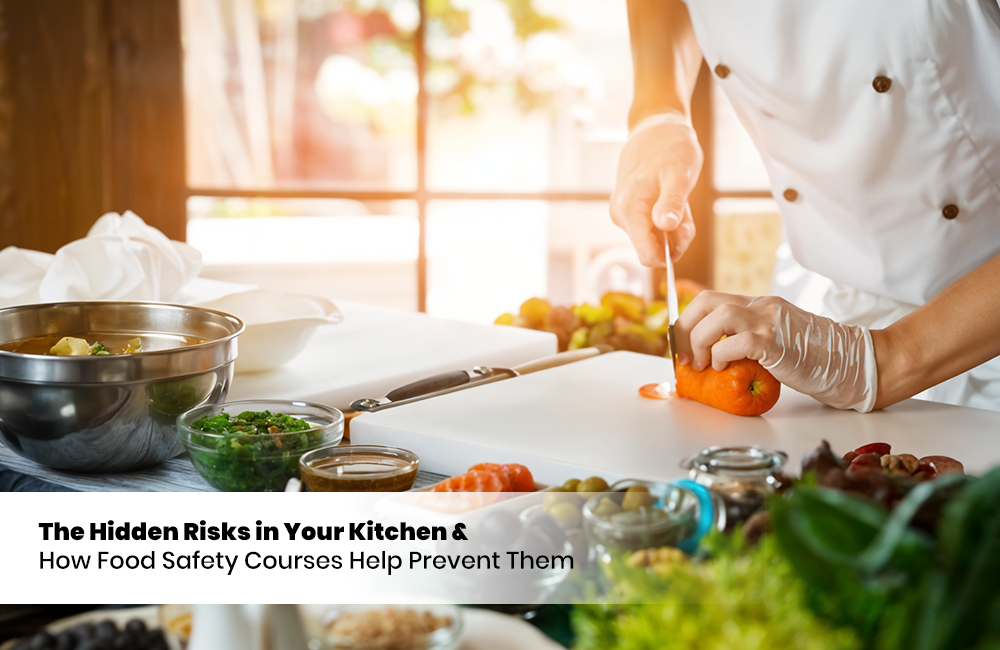
Do you really know what’s happening in your kitchen? That is really a question! Most of the food safety issues start in the kitchens of your home and restaurants. These mistakes can range from microbial contamination to physical safety hazards such as fire. Kitchen safety should be ensured because even a small mistake can lead to big health risks. In that case, food safety courses help you understand the importance of hygiene in food preparation and prevent hidden dangers.
The truth about hidden kitchen risks
Cross-contamination
Cross contamination in the kitchen can happen in multiple ways. It can happen food to food and person to food. Food to food contamination happens when raw meat juices drip to freshly cut vegetables. Person to food contamination happens when a person handles clean food without washing hands after touching raw food. Promoting food safety awareness is essential to prevent cross contamination in the kitchen.
Using the same cutting board or knife for both raw and cooked food without washing properly is another cause of cross contamination. Careless placement of food can lead to the spread of bacteria from the surface to the food.
Poor personal hygiene
Personal hygiene is of utmost importance in kitchen settings. Not washing hands with liquid soap before and after handling food and after using restrooms is a sign of poor personal hygiene. Touching the face, hair, or phone while preparing food can increase the risk of bacterial infection to those who consume the food.
Incorrect storage temperatures
Keeping food at room temperature (20°C – 25°C) is not safe, as it allows the growth of foodborne bacteria that contaminate the food. Incorrect refrigerator temperature or not making the fridge cold enough falls under hidden kitchen dangers. Another mistake is storing raw and cooked foods together as this increases the risk of contamination.
Unclean surfaces and utensils
Using dirty clothes and sponges to clean kitchen surfaces promotes bacterial growth. Handling cutting boards with old stains can result in infection for consumers. Improperly washed dishes used for cooking purposes foster the growth of foodborne bacteria like Salmonella, E. coli, and Listeria.
Why are these risks dangerous?
Bacteria like Salmonella, E. coli, and Listeria grow rapidly at the temperature of 5°C – 60°C. This temperature range is often considered as the danger zone for food. It is risky to keep food at this temperature for a long time. Bacteria or germs in contaminated food can cause stomach infections, food poisoning, vomiting, and fever.
Even if the food is contaminated, you may not be able to identify it through appearance or smell. So, it is best to avoid the circumstances that make the food contaminated. Always keep in mind that children, elderly people and pregnant women are among consumers. A small mistake can make these people sick and can have a serious impact on their health. This indicates the importance of hygiene in food preparation.
How food safety courses help prevent these problems
Teach you safe food handling basics
Wash your hands in clean water with soap for at least 20 seconds before and after handling food and after using restrooms. Keep raw and cooked food separately to prevent cross contamination. Wash cutting boards, utensils and dishes properly with soapy water to remove stains or food remnants along with disinfection process after washing.
Guide you on proper cooking temperatures
Cooking temperatures vary for each food item. Different time and temperature combinations are available as per food types but the standard cooking core temperature for each product should be above 75°C for safe cooking.
Various food items need to be cooked in different temperatures to get the desired taste and to kill the microorganisms. You can use a thermometer to check the internal temperature to prevent foodborne diseases.
Proper cleaning and sanitizing methods
Cleaning is done to remove dirt and stains, while sanitizing is done to kill the germs.
Cleaning is required to clean the surfaces and equipment before sanitizing. Then use a food safe sanitizer to sanitize the surfaces and equipment. Spray the solution on the surface and allow it to dry. You can immerse small equipment in the sanitizer solution. Make sure to air dry after applying the solution.
Safe storage practices
Safe storage practices are required to store the food safely after preparation. Keep the refrigerator temperature at or below 5°C and freezer temperature at or below −18°C while storing food. Cooked food can be kept in the refrigerator safely for 3 days only . Promoting food safety awareness helps you follow safe storage practices.
Benefits of taking a food safety course
Taking a food safety course in UAE gives you the knowledge about how to increase food safety in the kitchen. This helps to keep your family and customers safe. Ensuring food safety reduces the risk of food poisoning. Improvement in kitchen hygiene builds trust in consumers about the restaurant. Additionally, it helps you meet legal requirements and ensure the business is functioning fine without any fines.
Food safety begins in the kitchen. It may look fine but still has hidden kitchen dangers. Sometimes silly carelessness can cause issues for people’s health. Taking necessary steps to prevent these issues can help you keep everyone safe. This can be achieved through a food safety course. Enrolling for such a course can help you protect yourself and your loved ones. Always remember that safe habits lead to a safe kitchen.
Cresco Safe is a training and consultancy company specializing in Health, Safety and Environment services. We offer the best food safety course in Dubai and provide certifications for individuals and companies across various industries.

Subscribe our Newsletter
Sign up to receive more information about us.