
Food safety has now become one of the highest priorities of consumers, regulators, and businesses all over the world. In emerging markets like UAE and India, there is constant pressure on food businesses to produce safe and quality foods in adherence to stringent regulations. Here is where the importance of ISO 22000:2018 certification for food businesses in UAE India comes into play.
ISO 22000:2018 is an internationally recognised framework identifying, controlling and preventing food safety hazards across the supply chain. This way, it helps business to grow, strengthen the brand and reach global markets.
What Is ISO 22000:2018 and How Does It Differ from Earlier Food Safety Standards?
ISO 22000:2018 is an international standard for establishing, implementing, maintaining and improving the food safety management system. Scope of the standard includes organizations which operate in the food chain from the production and processing up to distribution and consumption.
Quite a few differences may be identified in the new version 2018 as compared with ISO 22000:2005 standard.
High-Level Structure (HLS)
The main difference that has been introduced into the new version is the adoption of the High-Level Structure (HLS). With HLS, the ISO 22000 standard can now be integrated with other management system standards including ISO 9001 and ISO 14001. The adoption of HLS makes it possible for different management systems such as the quality management system, environmental management system, and food safety management system to be integrated within the organization.
Risk-Based Thinking
Risk based thinking is one of the main components that have been included in the new standard. It includes two categories of risks:
- Strategic risks that can affect the effectiveness of the management system.
- The operational risks related to the food safety hazards and controls.
In this way, it allows companies to anticipate problems before they happen.
Enhanced PDCA Cycle
The application of the PDCA methodological approach in ISO 22000:2018 is used both in an organizational and operational levels and provides a framework for continuous improvement and efficient management of food safety processes.
HACCP vs ISO 22000
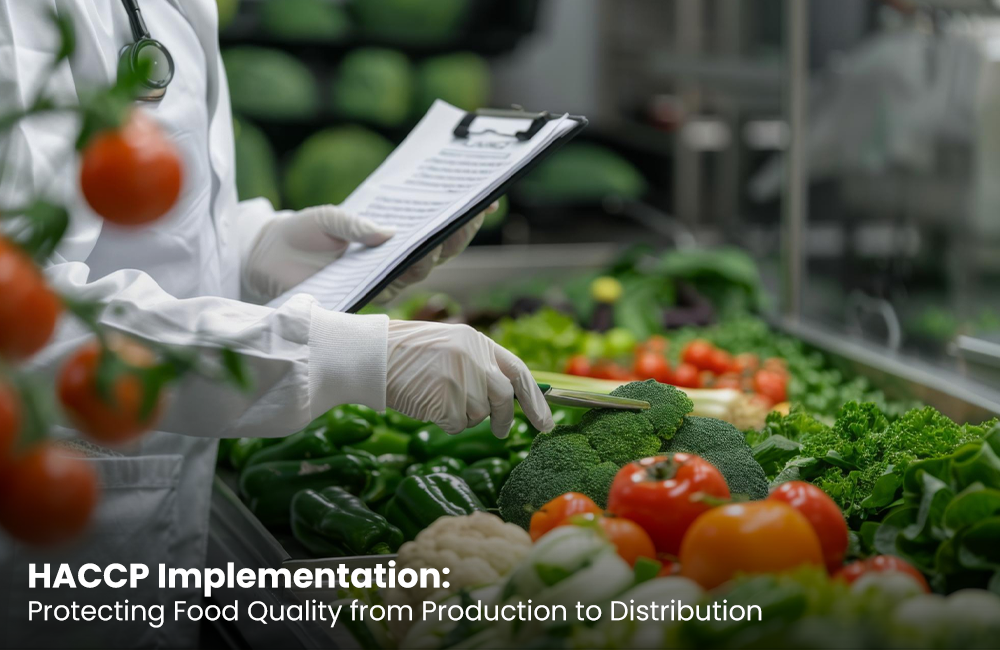
Comparison between HACCP vs ISO 22000 can be found in many companies. Whereas HACCP is concerned about hazard identification and control measures, ISO 22000 includes components of a management system as leadership, organizational context, communication, and continuous improvement.
Relationship with GFSI-Recognized Schemes
Furthermore, ISO 22000 is also strongly related to some GFSI recognized certification. Many food companies that want to do international business rely on ISO 22000 as a basis for obtaining other food safety certificates.
Core Requirements and Clauses of ISO 22000:2018 Every Food Business Must Know
It is very important to understand the main elements of the standard to implement it successfully. Below are the major requirements and their significance.
Context of the Organization (Clause 4)
Organization needs to take into consideration both the internal and external issues that influence its ability to achieve the set objectives of food safety management. The requirements of all interested parties including consumers, suppliers, legislation and employees need to be understood.
Leadership and Commitment (Clause 5)
Top management is crucial to the implementation of food safety management systems. The management should come up with a food safety policy, allocate responsibilities and foster a food safety culture within the business organization.
Planning and Risk Management (Clause 6)
There is a need to assess the opportunities and risks that could influence the food safety performance. Opportunities and risks include objectives, plans of action and resource availability.
Support and Documentation (Clause 7)
Sufficient resources, employee competence, awareness, communication, and food safety management documentation are important elements that should be present to have an effective food safety management system.
Operational Planning and Control (Clause 8)
This clause covers the implementation of prerequisite programs (PRPs), operational prerequisite programs (OPRPs), and hazard control measures.
Key elements include:
- Hazard identification and analysis
- Establishment of critical control measures
- Emergency preparedness and response
- Traceability systems
- Management of non-conforming products
HACCP Plan Integration
ISO 22000 integrates the concept of HACCP into a management system context. The organizations have to develop and implement a HACCP system to control the food safety hazards effectively.
Performance Evaluation (Clause 9)
Businesses must monitor, measure, analyse, and evaluate the effectiveness of the food safety management system through:
- Internal audits
- Management reviews
- Performance monitoring
- Corrective actions and continual improvement
The ISO 22000 clauses explained in an organized way for food safety and organizational excellence.
From Application to Approval: How Food Businesses Get ISO 22000:2018 Certified
Obtaining the ISO 22000:2018 certificate is a business process that adds to the resilience of your company.
This process usually begins with a gap analysis where you find out what your current status is and how far you can go in terms of the ISO standard. After that comes the development and implementation of the required policies and procedures.
Next, employee training and awareness programs are conducted to make sure all employees understand their roles in the food safety management system. Normally, organizations conduct internal audits to find and rectify gaps that need fixing before the official certification audit.
Certification by an accredited certification body is done through a two-step audit process where documentation and preparedness are assessed at one stage and implementation and effectiveness at the other.
After passing successfully, organizations get ISO 22000:2018 certification and start the process of surveillance and continual improvement. ISO Certification for food businesses operating in the UAE and India creates new avenues for doing business.
The ISO 22000:2018 certification for food businesses in UAE and India is an internationally recognized method of dealing with food safety issues and compliance. It will assist the organization to build customer confidence, improve their performance, and penetrate international markets.
The benefits that come from ISO 22000:2018 certification have long-term implications in terms of improving food safety systems and achieving excellence.
Cresco is a leading company helping food businesses in the UAE and India attain ISO 22000:2018 certification. Contact us today for a free readiness assessment.
FAQs
1. What is the difference between ISO 22000:2018 and HACCP certification for food businesses?
HACCP focuses specifically on identifying and controlling food safety hazards in the production process. ISO 22000:2018 is a broader food safety management system that incorporates HACCP principles along with leadership, risk management, communication, and continuous improvement requirements.
2. Is ISO 22000:2018 certification mandatory for food manufacturers in the UAE and India?
ISO 22000:2018 certification is generally not mandatory by law in the UAE or India. However, many retailers, international buyers, and business partners require it as proof of a company’s commitment to food safety and quality standards.
3. How long does the ISO 22000:2018 certification process typically take for a food business?
The certification timeline usually ranges from three to six months, depending on the size of the business, its existing food safety practices, and the level of preparation required. Organizations with established systems may achieve certification more quickly.
4. Can a food business in India use ISO 22000:2018 certification to export to the UAE and other Gulf markets?
Yes, ISO 22000:2018 certification can significantly improve export opportunities by demonstrating compliance with internationally recognized food safety standards. While additional country-specific requirements may apply, the certification enhances credibility and market acceptance in the UAE and other Gulf countries.
5. How often does ISO 22000:2018 certification need to be renewed and what does surveillance involve?
ISO 22000:2018 certification is typically valid for three years, with surveillance audits conducted annually by the certification body. These audits assess whether the organization continues to comply with the standard and is maintaining and improving its food safety management system.

Subscribe our Newsletter
Sign up to receive more information about us.