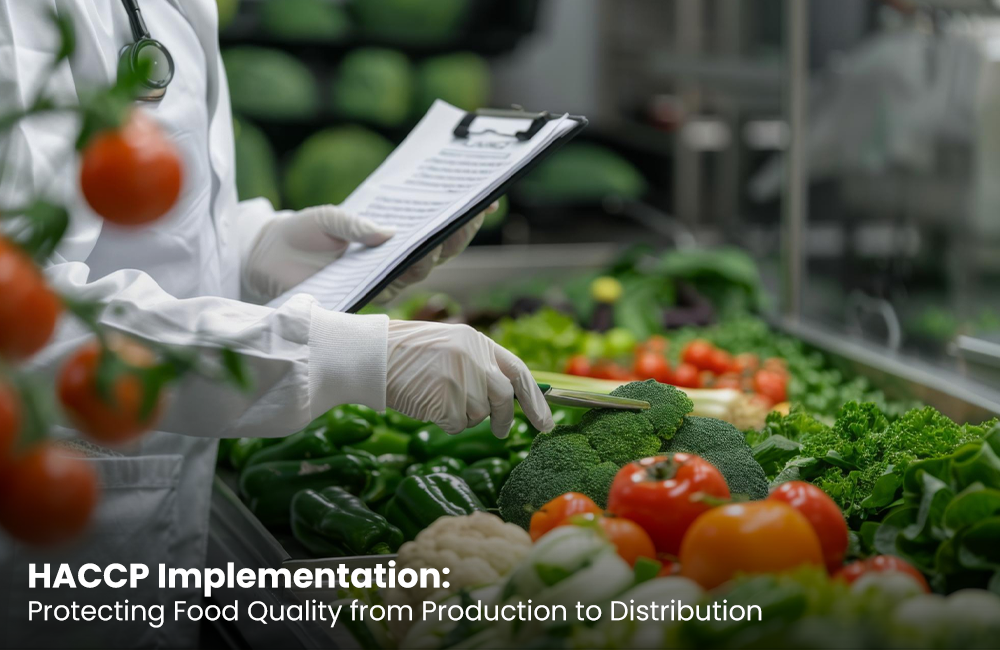
Food safety remains the most important issue in the food business sector. At each stage of the supply chain, there are many possibilities of various factors that might affect safety and quality of food. Any little mistake may cause food contamination, recall of the products, regulatory fines, and damage customer belief.
In this case, a HACCP (Hazard Analysis and Critical Control Points) system comes as a very important solution of the problem. HACCP is an internationally recognized preventive system aimed at helping food businesses to assess potential risks and introduce controls to prevent various hazards. The system deals with biological, chemical, and physical hazards in the process of production and distribution.
Understanding HACCP and Its Role in Food Safety
A HACCP program is a systematic food safety management system that is meant to analyse hazards associated with food and establish control measures at crucial points of the food production process.
Unlike other quality control practices, which only detect problems after production, the HACCP program is focused on prevention through monitoring and risk assessment. It entails carrying out an analysis of food safety hazards and identification of the critical control points (CCP) where such hazards may be controlled or removed.
HACCP is widely used across various sectors of the food industry, including:
- Food manufacturing and processing
- Dairy and beverage production
- Meat, poultry, and seafood industries
- Restaurants and catering services
- Food packaging and distribution
- Retail food businesses
Key Steps in HACCP Implementation Across the Food Supply Chain
Successfully implementing HACCP requires a systematic approach that addresses food safety risks from production to distribution. The steps are:
- Conduct Hazard Analysis
- Identify Critical Control Points (CCPs)
- Establish Critical Limits
- Monitor Critical Control Points
- Define Corrective Actions
- Verify HACCP System Effectiveness
- Maintain Documentation and Records
These steps form the foundation of an effective food safety plan, helping businesses perform thorough risk assessments, implement preventive controls, and maintain consistent food quality control throughout the supply chain.
Benefits of HACCP Implementation for Food Businesses
HACCP brings about numerous benefits from an operational, regulatory, and commercial perspective for any food business regardless of its size.
Improves Food Quality and Consistency
Through HACCP, a company is able to come up with standardized methods of producing, processing, storing, and delivering foods. The system assures consistent food production that meets the required quality and safety standards.
Reduces Contamination Risks
One of the primary objectives of HACCP is to prevent contamination before it occurs. Continuous monitoring of critical control points helps identify biological, chemical, and physical hazards early. This minimizes the risk of foodborne illnesses, product recalls, and costly disruptions.
Enhances Customer Confidence and Regulatory Compliance
Consumers demand that food products should comply with strict safety standards. Proper implementation of a HACCP program is indicative of an organization’s dedication to food safety and will aid in attaining compliance to food safety standards as per national and international standards.
It is common for regulators and consumers to seek proof of an existing HACCP procedure, making compliance simpler during inspections and audits.
Supports ISO 22000 Certification and GMP Compliance
The HACCP process is a crucial component of several internationally accepted food safety systems, like ISO 22000 Certification. Together with GMP, HACCP can enhance an organization’s food quality assurance process significantly.
Expands Export Opportunities and Business Reputation
International export markets require food exporting companies to have a functional food safety management system. HACCP implementation will help business organizations comply with international standards and increase their market share and reputation amongst consumers and retailers.
Common Challenges and Best Practices for Successful HACCP Implementation
While HACCP offers numerous benefits, successful implementation requires commitment, planning, and continuous improvement.
Common Challenges
Many organizations face obstacles during implementation, including:
- Limited employee understanding of HACCP principles
- Inadequate documentation and record management
- Insufficient management commitment
- Difficulty identifying appropriate critical control points
- Lack of regular monitoring and verification activities
Without proper planning, these challenges can reduce the effectiveness of the HACCP system and increase food safety risks.
Invest in HACCP Training : Employee competency is important to achieve success in implementation. HACCP training provides employees with adequate understanding of hazard analysis, monitoring, corrective measures, and documentation. Competent employees can handle the situation well by maintaining food safety standards.
Maintain Accurate Documentation
Proper documentation is one of the main requisites of HACCP. Businesses need to document all aspects of hazard analysis, monitoring, correction, verification, and training of employees.
Conduct Regular Food Safety Audits
Routine food safety audits assist in assessing the effectiveness of the HACCP system. Audits conducted internally provide information on how to improve processes prior to external inspections. This ensures compliance with relevant standards and changes in operations.
Promote Employee Awareness and Continuous Improvement
Food safety is not a task but rather a process. Companies need to promote awareness among employees, conduct regular review of HACCP systems, monitor changes in processes, and upgrade systems in case of new hazards.
Implementation of HACCP is crucial for food quality assurance and consumers’ safety. Identification of hazards, development of control measures, process monitoring, and proper documentation will minimize the risk of food safety incidents and increase efficiency of the operations.
A properly implemented HACCP program will not only facilitate compliance with regulations but will also help to build consumer confidence, improve the quality of products, and open new markets. In the evolving environment of food safety regulations, companies capable of implementing an effective HACCP program can ensure their sustainable growth and success.



Subscribe our Newsletter
Sign up to receive more information about us.