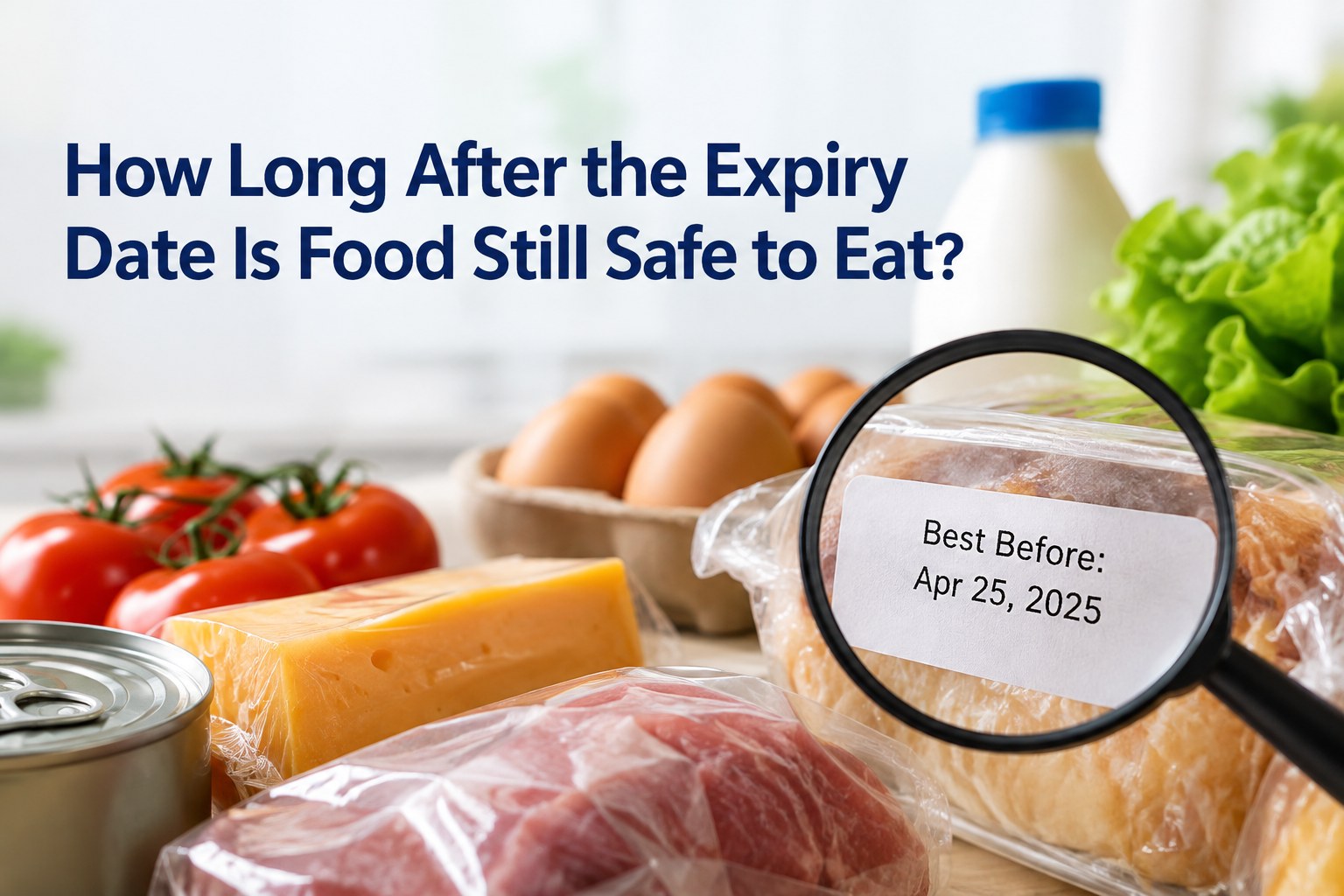
Seeing a date printed on a food package can raise a simple but important question: how long after the expiry date is food still safe to eat? The answer is not the same for every product. A date label may refer to quality rather than safety, while factors such as food type, storage conditions, packaging, and contamination can affect actual safety. Understanding food expiry dates and proper handling is an essential part of basic food safety, helping consumers make informed decisions and reduce the risk of foodborne illness.
Understanding Food Expiry Dates and Food Safety Labels
Food date labels are not always safety deadlines. Terms such as “best-before,” “best if used by,” “use-by,” and “sell-by” can have different meanings depending on the product and local regulations. A best-before date generally relates to quality, including flavour, texture, or freshness. A sell-by date mainly helps retailers manage stock. A use-by or expiry date may carry greater importance for certain highly perishable products. So, the label instructions should be followed carefully.
As labelling systems vary, consumers should read the wording around the date instead of treating every printed date as an identical expiration point. Food safety labels are made to provide useful information, but the date should be considered alongside storage instructions and the condition of the product.
What Happens to Food After Its Expiry Date?
After a labelled date, food may gradually lose quality. Flavour, colour, texture, freshness, or nutritional quality can change. However, safety depends on more than the calendar date. Bacterial growth in food can occur when perishable foods are kept at unsafe temperatures or handled improperly. Moisture, exposure to air, damaged packaging, and repeated temperature changes can also contribute to food spoilage and contamination.
Some foods are more vulnerable than others. Perishable foods such as meat, poultry, seafood, dairy products, cooked foods, and certain ready-to-eat items generally require stricter temperature control than many dry, shelf-stable products. Therefore, there is no universal number of days that food remains safe after a date has passed.
Key Factors That Determine Whether Expired Food Is Safe
When assessing food after a labelled date, consider these factors:
- Type of food: Perishable foods usually require greater caution than shelf-stable products.
- Storage temperature and conditions: Food kept consistently at the recommended temperature is less likely to develop unsafe bacterial growth.
- Whether the package has been opened: Opening can expose food to air, moisture, hands, utensils, and other sources of contamination.
- Signs of spoilage: Unusual odour, mould, discolouration, leaking, swelling, or major texture changes can indicate deterioration.
- Time elapsed after the date: The longer food is stored, the greater the opportunity for quality deterioration and, depending on the product and conditions, microbial growth.
- Proper food handling practices: Clean hands, clean utensils, appropriate refrigeration, separation of raw and ready-to-eat foods, and prompt chilling all support safer storage.
These safe food storage and food hygiene practices matter because a printed date cannot compensate for poor temperature control or contamination.
When Should You Avoid Eating Expired Food?
Food should be discarded when it shows clear signs of spoilage, including an unusual smell, visible mould, unexpected colour changes, a swollen or leaking package, or an abnormal texture. Do not taste questionable food simply to determine whether it is safe. More importantly, harmful bacteria may not always change a food’s smell, appearance, or taste. Therefore, the absence of visible spoilage does not guarantee safety.
Extra caution is necessary with higher-risk foods, including raw or undercooked meat, poultry, seafood, eggs, unpasteurized products, and other foods that can support harmful microorganisms. If a product has been improperly refrigerated, left at room temperature too long, recalled, or handled in an unsafe environment, the safest choice is to discard it. For businesses, preventing foodborne illness requires more than checking dates. Food safety training, HACCP food safety principles, food hygiene training, and a structured food safety management system help establish controls for storage, preparation, temperature monitoring, cleaning, and handling.
So, how long after the expiry date is food still safe to eat? There is no single answer. It depends on the food type, the meaning of the date label, storage conditions, packaging, time elapsed, and food handling practices. Some products may remain acceptable beyond a quality-based date when properly stored, while foods carrying a genuine safety-related use-by or expiry instruction should not be consumed after the stated date.
When in doubt, prioritize food safety over avoiding waste. Understanding food expiry dates and following responsible food handling practices can help reduce foodborne illness risks. For organizations looking to strengthen their standards, CrescoSafe offers professional food safety and HACCP training to support safer food operations. Follow manufacturer storage instructions and applicable food safety requirements when handling products with uncertain dates or storage histories in situations.


Subscribe our Newsletter
Sign up to receive more information about us.