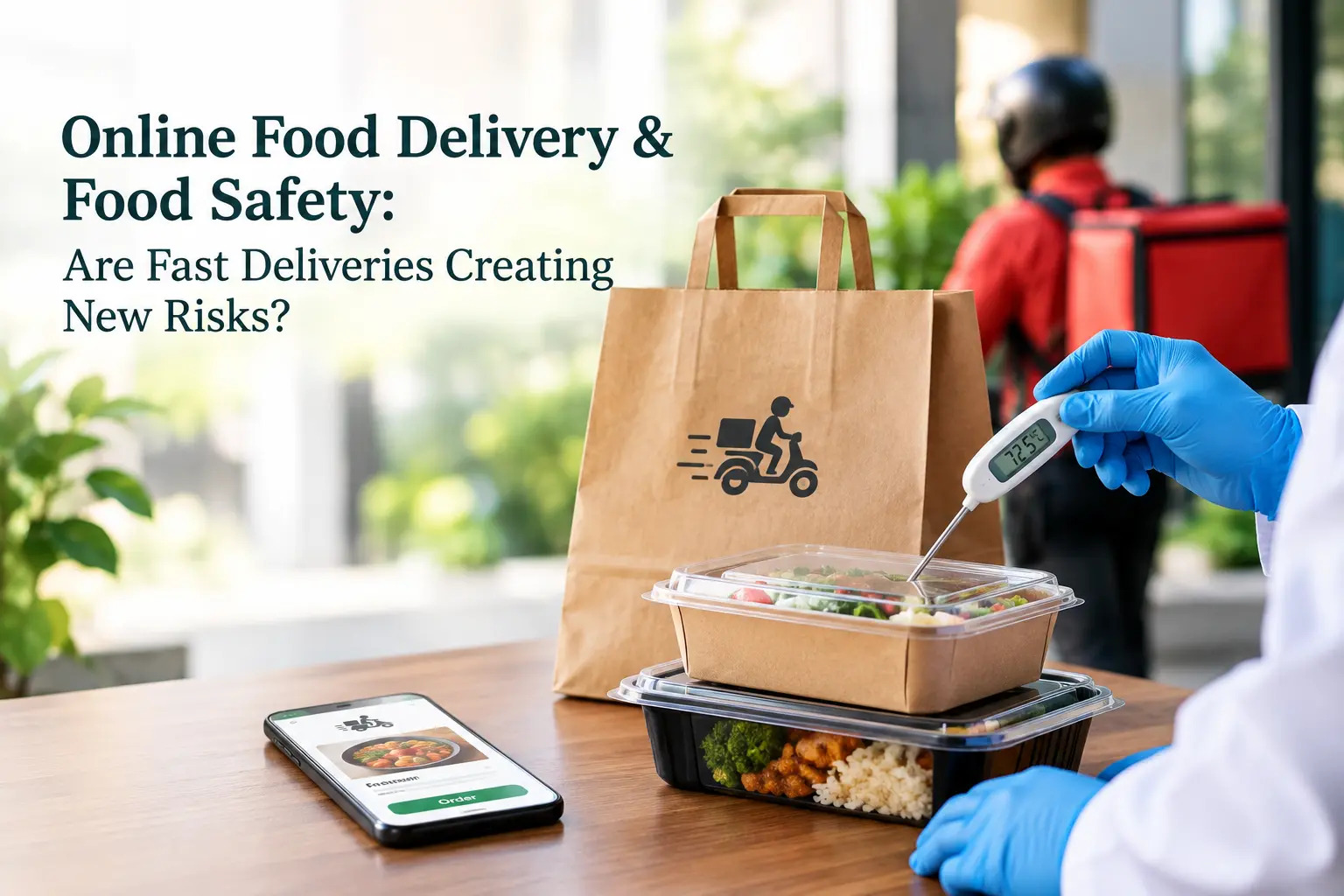
Ordering food online has become part of everyday life. With a few taps, customers can get food delivered to their doorstep. As restaurants and delivery platforms compete to offer faster services, convenience has become a major selling point. But when food moves from the kitchen to the customer, online food delivery & food safety must remain a priority.
Fast delivery does not automatically mean unsafe food. However, food can become risky when temperature control, hygiene, packaging, handling, or transportation is overlooked. Even a well-prepared meal can be exposed to contamination if it is poorly handled after leaving the kitchen.
This makes food safety during delivery a shared responsibility. Restaurants, food handlers, delivery people, and consumers all have a role to play in keeping delivered food safe.
How Fast Food Delivery Can Affect Food Safety?
Speed can reduce the amount of time food spends in transit, but it does not eliminate food safety challenges. One of the biggest concerns is temperature control. Foods need to remain at appropriate temperatures during preparation, storage, and transportation. When food stays too long within the temperature danger zone, harmful bacteria can multiply rapidly.
Time-temperature abuse can happen when freshly prepared food is left waiting for collection, transported without adequate insulation, or delayed before reaching the customer. This is particularly important for foods containing meat, poultry, seafood, dairy, eggs, and other perishable ingredients.
Safe food transportation also depends on suitable containers and delivery equipment. Insulated delivery bags can help maintain appropriate temperatures, while poor packaging may allow heat loss, leakage, or contamination.
Good food handling practices should therefore continue beyond the restaurant kitchen. A short delivery time is useful, but proper hygiene, temperature monitoring, and controlled transportation are what make the process genuinely safe.
Key Food Safety Risks in Online Food Delivery
Once food leaves the kitchen, several factors can affect its safety. Restaurants may follow strong food hygiene procedures during preparation, but delivery introduces additional points where contamination or temperature problems can occur.
The main food safety hazards associated with online orders include:
- Improper temperature control: Food may become unsafe if hot meals cool down excessively or chilled foods become too warm.
- Cross-contamination: Contact between cooked food, raw ingredients, dirty surfaces, or contaminated packaging can introduce harmful microorganisms.
- Poor personal hygiene: Inadequate hand hygiene or careless handling by food handlers and delivery people can contribute to food contamination.
- Unsafe food packaging: Damaged, unsealed, unsuitable, or leaking containers can expose food to contamination.
- Delayed delivery and extended holding times: Long waiting periods can increase the risk of bacterial growth, particularly when temperature control is inadequate.
- Improper storage before delivery: Food that is kept incorrectly after preparation and before collection may already be unsafe before the delivery journey begins.
Managing these risks requires consistent safe food handling at every stage, rather than focusing only on what happens inside the restaurant.
How Restaurants and Delivery Services Can Ensure Safe Food Delivery?
Safe delivery starts with proper planning. Restaurants, food handlers, and delivery people should understand how their actions can affect food safety throughout the delivery process. This is where HACCP food safety practices can be particularly valuable.
A HACCP-based approach helps businesses identify potential hazards, determine where controls are required, and establish procedures for managing those risks. For online orders, this may include controlling preparation and holding temperatures, maintaining hygienic packaging procedures, and ensuring food is transported appropriately.
Insulated delivery bags, secure food containers, temperature monitoring, and clean handling practices can all support safer transportation. Delivery people should also understand the importance of keeping food protected during transit and avoiding unnecessary delays.
Regular food safety training and food hygiene training help employees understand these responsibilities. When these practices are incorporated into a food safety management system, businesses can create a more effective approach to managing risks from preparation to delivery.
What Consumers Can Do to Stay Safe When Ordering Food Online?
Food safety does not end when the delivery arrives. Consumers can also take a few simple steps to reduce their exposure to potential risks. Start by checking the packaging. Containers should be properly sealed, intact, and free from visible leakage or damage. If packaging appears tampered with or food has spilled inside the delivery bag, it may be better to contact the restaurant.
Pay attention to the condition of the food as well. Hot food should still be appropriately hot, while chilled items should feel properly refrigerated. Unusual smells, changes in appearance, or signs of spoilage should not be ignored.
Once food arrives, follow basic food safety at home practices. Perishable food that will not be eaten immediately should be refrigerated promptly. Leftovers should be stored in clean, suitable containers and reheated thoroughly before consumption.
Simple food hygiene practices, combined with safe food storage and reheating food safely, can make a meaningful difference. Consumers cannot control every part of the delivery process, but they can make safer choices once the order reaches their home.
Fast delivery has made ordering food easier than ever, but convenience should never come at the cost of online food delivery & food safety. Temperature control, hygienic handling, suitable packaging, safe transportation, and proper storage all play an important role in protecting consumers.
For food businesses, consistent food safety training and HACCP-based procedures can help identify and control delivery-related hazards before they become problems. A strong food safety culture also ensures that employees understand their role at every stage of the process.
Want to strengthen your food safety practices? Explore CrescoSafe for professional food safety and HACCP training designed to help food businesses build safer and more reliable food handling systems.

Subscribe our Newsletter
Sign up to receive more information about us.